
An ASRS (Automated Storage and Retrieval System) consists of many parts working together: cranes or shuttles, lifts, conveyors, sensors, controls and the software that runs it all. If one link fails, an entire aisle or the whole system often stops. After years of working on systems in sorting centres and warehouses, we keep seeing the same causes.
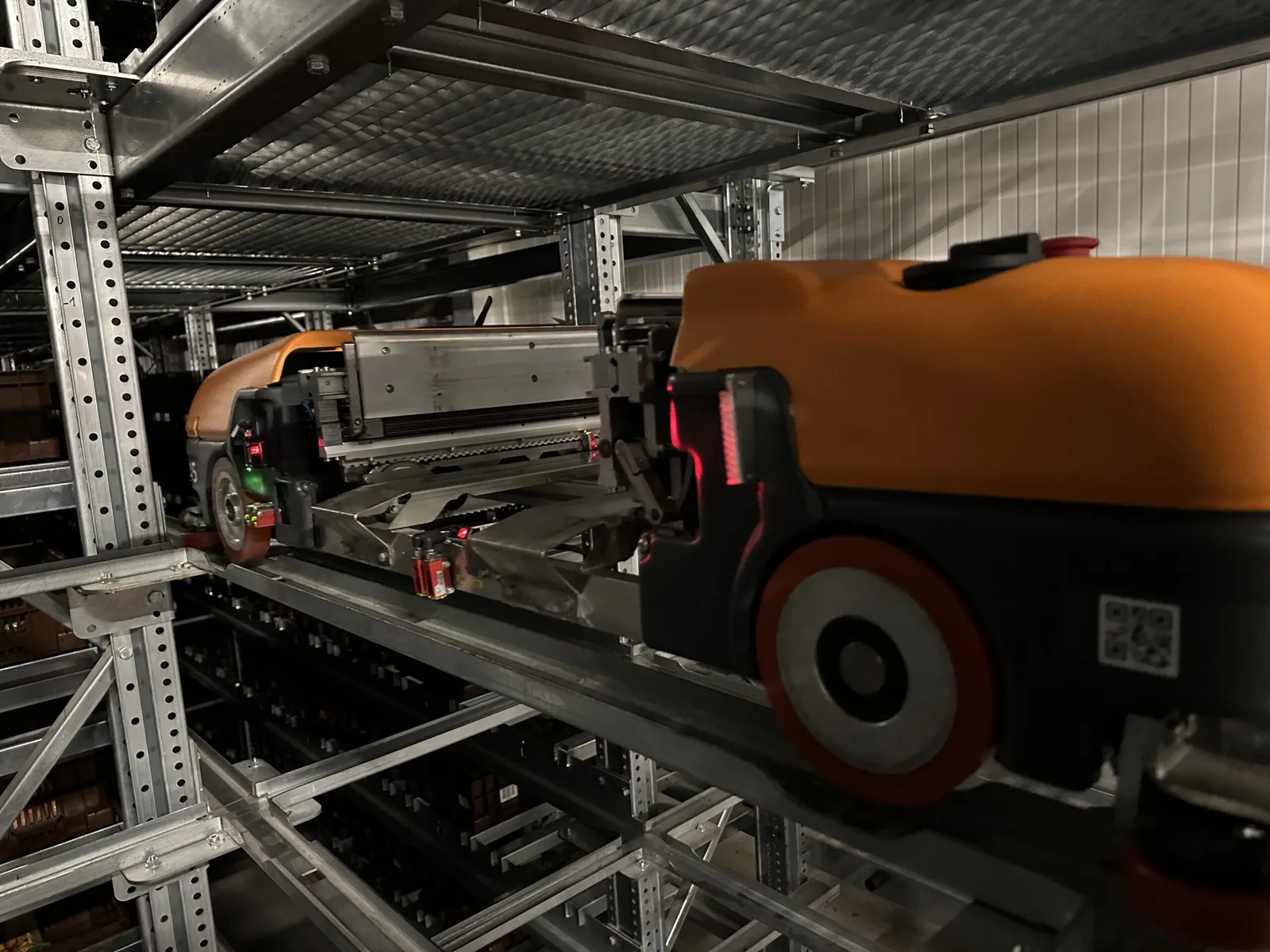
1. Dirty or misaligned sensors
Photo-eyes, reflectors and proximity switches are the eyes of the system. Dust, film residue, condensation or a small knock against a bracket is enough to trigger a fault. It is the most common cause, and often the quickest to fix.
2. Positioning errors
Cranes and shuttles know where they are through encoders, barcode tapes or laser measurement. A dirty barcode strip, a loose encoder or an incorrectly taught position leads to "position not reached" faults or loads placed just beside the slot.
3. Wear of mechanical parts
Wheels, guide rollers, toothed belts, chains and bearings wear gradually. Things run fine for a long time, until play or vibration causes positioning faults or failures. Wear is easy to predict with periodic inspections.
4. Load problems
Overhanging or damaged pallets, skewed totes, loads that are too heavy or too high: the profile check rejects them or they jam in the racking. The system is not broken, but the inbound flow needs to improve.
5. Drives and power supply
Frequency inverters, motors and brakes can fail due to overheating, wear or voltage dips. A fault code on the inverter often tells you exactly where to look.
6. Communication and controls
The system talks to the controller (PLC) and the warehouse control system (WCS/WMS) via network or optical data links. A loose connector, a dirty data link or a software fault can make a crane "blind" while the mechanics are fine.
7. Safety circuits
Doors, light curtains, emergency stops and fences keep people safe. A door that doesn't close properly or a faulty switch rightly stops the system. Bypassing them is never a solution.
What you can safely do yourself
- Write down the exact fault code, the time and what happened just before.
- Follow the supplier's reset procedure, and only if it is safe.
- Never enter the racking or crane aisle without the prescribed lockout (LOTO).
- Does the same fault keep coming back? Then resetting only treats the symptom: have the cause investigated.
Preventing breakdowns
Most of these causes can be prevented with regular preventive maintenance: cleaning and checking sensors, measuring wear parts and replacing them in time, checking positions and analysing fault logs. That way an unexpected stop becomes a planned service.