
Stacker cranes in a high-bay warehouse make thousands of movements a week, often across multiple shifts. Good maintenance extends their service life, prevents unexpected failures and keeps work safe. But how often is "good"? The short answer: use the manufacturer's schedule as the basis, then adjust it to how intensively and in what environment your crane operates.
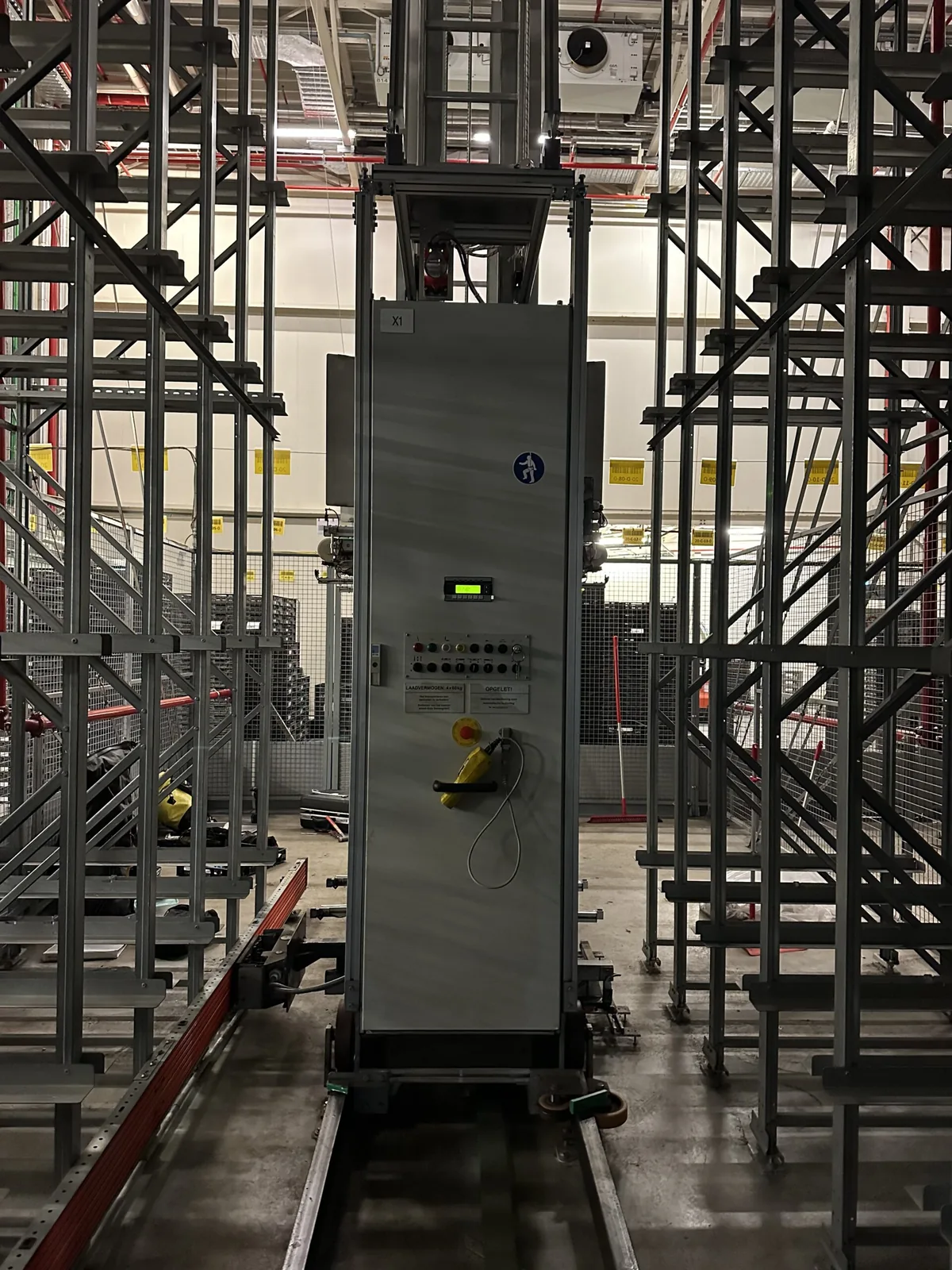
What the maintenance interval depends on
Manufacturer specifications are always the starting point; Viastore, Dambach, Quickstore and other suppliers give intervals per component. Intensity of use weighs heavily: a crane running 24/7 wears faster than one that only works during the day. The environment matters: in freezers or cold stores, dusty or humid spaces, parts wear differently. And age: older installations often need more attention.
A common set-up
In practice we often see a combination of short periodic checks (for example quarterly or every six months, depending on use) and a more extensive annual inspection and service. With intensive use, a shorter interval can be wise. The right schedule is best determined after an initial inspection of your situation.
What happens during a service
Checking and if necessary replacing wheels, guide rollers and bearings; checking hoisting, cables, belts or chains; adjusting positions and transfer points; cleaning and testing sensors and optical data links; checking drives, brakes and safety devices; and reading fault logs to spot problems early.
The legal side
In the Netherlands, employers are responsible under health and safety legislation for safe work equipment. Installations that can become dangerous through wear must be inspected periodically and the results recorded. A maintenance report per service helps you demonstrate this.
Signs your crane needs maintenance
- More positioning or transfer faults than before.
- New noises: squeaking, ticking or humming.
- Vibrations or jerky movements when accelerating and braking.
- Wear marks, metal dust or oil on the rail.
- Longer cycle times for no clear reason.
Maintenance that fits your planning
Maintenance doesn't have to stop your production. By scheduling services in quiet hours or during planned shutdowns, and with a fixed schedule in a maintenance contract, the crane stays reliable without surprises in your planning.